
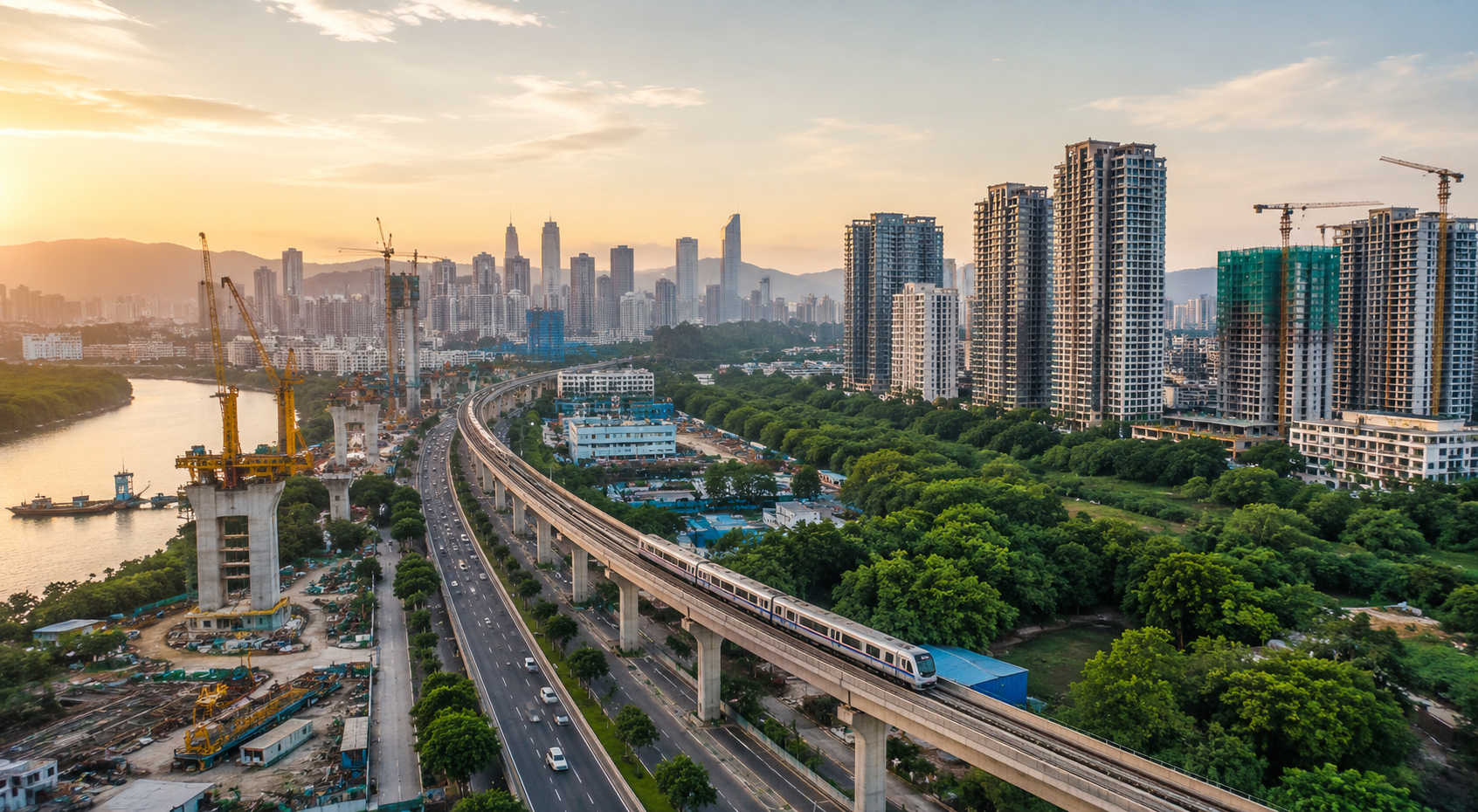
Thane is entering a major infrastructure phase, with projects worth nearly ₹55,000 crore aimed at improving connectivity and addressing the pressures created by rapid urbanisation. But for the real estate market, the bigger question is whether this infrastructure boom will create sustainable growth—or simply add more density to an already congested city.
From Mumbai’s Alternative to a Major Real Estate Hub
Thane has changed dramatically over the past two decades. Once known for its low-rise neighbourhoods, lakes and relatively open surroundings, the city has become one of the Mumbai Metropolitan Region’s key residential markets.
Its strategic location between Mumbai, Navi Mumbai and Bhiwandi, combined with improving transport connectivity and comparatively attractive housing options, has helped Thane attract both homebuyers and real estate investors. The expansion of residential development, particularly along corridors such as Ghodbunder Road, has accelerated this transformation.
However, the pace of real estate development has also exposed gaps in roads, public transport, water supply and other civic infrastructure.
₹55,000 Crore Infrastructure: What Is Coming?
The infrastructure programme includes a combination of metro corridors, flyovers, elevated roads, coastal road connections and other major connectivity projects. Collectively, these projects represent an estimated investment of around ₹55,000 crore.
The objective is clear: improve mobility, reduce bottlenecks and prepare Thane for future population and economic growth.
But there is an immediate challenge. With multiple projects being executed simultaneously, construction itself is contributing to traffic disruption and congestion in several parts of the city.
This creates a paradox: infrastructure designed to solve congestion can temporarily make congestion worse.
What Could It Mean for Thane Real Estate?
Infrastructure is one of the strongest drivers of long-term real estate development. Better roads and public transport can make previously less-connected locations more attractive to homebuyers, businesses and developers.
If the planned projects are completed efficiently, areas with improved connectivity could see stronger demand for residential and commercial properties. Shorter travel times to employment centres can also expand the practical boundaries of Mumbai’s housing market.
For developers, better connectivity could create opportunities for new residential projects, redevelopment and mixed-use developments. For investors, infrastructure-led growth could make certain micro-markets worth watching more closely.
However, infrastructure alone does not guarantee sustainable real estate appreciation.
The Risk: More Buildings Without Better Civic Infrastructure
Thane’s experience also highlights an important lesson for real estate investors: connectivity must grow alongside civic infrastructure.
Residents and experts have raised concerns about traffic, shrinking road space and pressure on essential services. The Times of India report also highlights concerns over water availability in parts of Ghodbunder Road, illustrating how real estate expansion can outpace basic infrastructure.
Urban planners have argued that simply adding roads and flyovers cannot solve all of Thane’s mobility challenges. A broader strategy connecting land use, public transport and environmental protection will be necessary.
This is particularly important for a city where rapid construction has already changed the urban landscape significantly.
Which Thane Locations Could Benefit?
From a real estate perspective, investors should not look at the ₹55,000 crore figure alone. The more important question is where infrastructure investment is actually translating into better connectivity and accessibility.
Micro-markets located near future metro stations, major road improvements, employment hubs and established social infrastructure could potentially attract greater interest.
However, buyers should also examine current property prices, upcoming supply, traffic conditions, water availability, project completion timelines and the quality of surrounding infrastructure before making an investment decision.
Thane’s Real Estate Story Is No Longer Just About Housing
The ₹55,000 crore infrastructure programme could mark an important turning point for Thane. If executed effectively, it could strengthen the city’s position as one of the Mumbai Metropolitan Region’s major residential and commercial destinations.
But the transformation comes with a warning.
Thane cannot solve the problems created by rapid urbanisation simply by building more infrastructure. It needs better-planned infrastructure.
For the real estate sector, the next few years could therefore be crucial. The locations that benefit most may not simply be those with the most construction, but those where connectivity, civic infrastructure, employment, liveability and real estate development come together.
The IndexTap Take
₹55,000 crore could be a major catalyst for Thane real estate—but infrastructure execution, civic capacity and sustainable urban planning will ultimately determine whether the city experiences a genuine transformation or simply another cycle of construction and congestion.