
In many apartment buildings, residents frequently defend changes by citing what others have already done. “Everyone has enclosed their balcony,” or “Several neighbours have extended their bedrooms,” are common arguments used in renovation disputes. Legally, however, one unlawful change does not justify another.
If a flat owner erects a permanent shade over a balcony, encloses it to create additional living space, or demolishes partition walls to enlarge a bedroom without first obtaining the approvals required by the sanctioned building plan or municipal laws, the changes are considered unauthorised, even if several other residents have done the same.
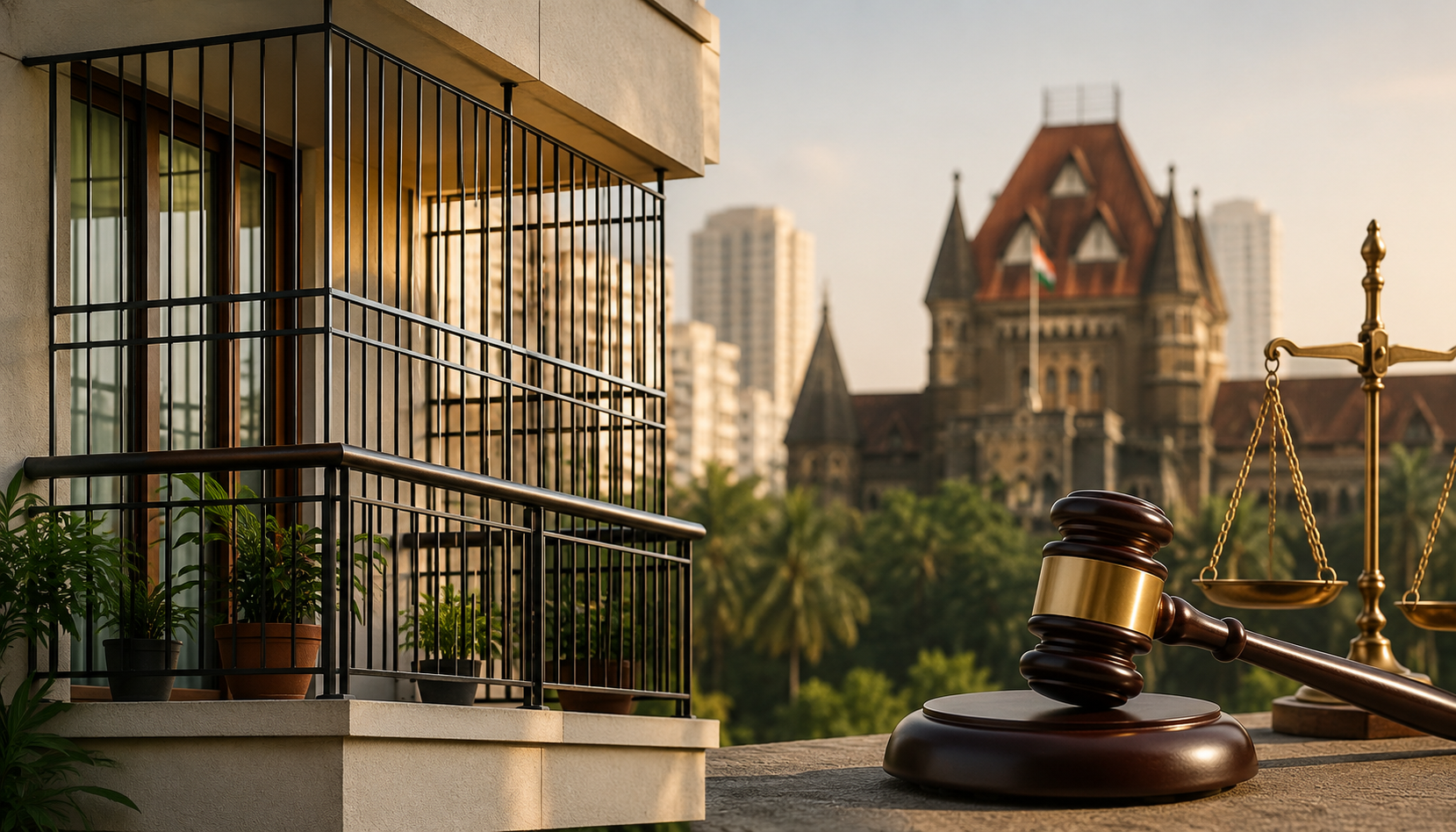
Recognising homeowners’ confusion, the Bombay High Court has directed the Maharashtra government to develop a comprehensive policy that clearly specifies the types of alterations flat owners can make to their apartments without first obtaining permission from municipal authorities.
The measure is likely to provide much-needed clarity for lakhs of apartment owners who often carry out modest improvements but are confused whether civic clearances are required.
What triggered the Bombay High Court’s directive?
According to media sources, a Bombay High Court bench noticed that homeowners frequently construct safety grills, lightweight protective structures over open terraces, make walls with gypsum or wooden panels, or reorganize utility facilities to meet their requirements. While these are often regarded as minor changes, the lack of clear, consistent guidelines has resulted in confusion, disagreements with housing societies and builders, and inconsistent action by municipal authorities.
The justices recognized that the open-to-sky terraces, as originally built by the developer, had been illegally enclosed by the neighbour. They concluded that the continuous presence of such unauthorized structures could not be tolerated and should be dismantled immediately, according to LiveLaw.
According to a LiveLaw study, flat owners frequently build safety grills, lightweight sheds over balconies or terraces, and modify interior partition walls with wooden or gypsum panels to meet their needs. While such improvements are frequently made after an Occupation Certificate (OC) is obtained, making similar changes before the OC is issued might cause the certificate to be delayed, preventing the developer from completing the project and frequently resulting in conflicts and litigation.
The Bombay High Court found that there is no clear, cheap, or conveniently accessible method for seeking consent for such changes. In the absence of clear guidelines, many residents make these changes without consulting the municipal corporation.
What exactly will the policy entail?
The suggested approach is expected to lessen disputes while assisting residents in determining what they can lawfully modify within their residences without breaching municipal restrictions.
According to media reports, the proposed policy will address common alterations made in residential buildings, such as whether residents can install safety grills, enclose balconies, or add lightweight coverings to balconies and terraces, erect or remove non-load-bearing partition walls, amalgamate or divide rooms with temporary materials, or reallocate utility areas within their flats. Clear guidance on such matters would help homeowners and municipal governments avoid avoidable disagreements.
The High Court also emphasised the importance of civic entities using a consistent approach when dealing with unlawful renovations, rather than following different procedures across jurisdictions. While the state has been asked to develop the strategy, the court made it plain that until such guidelines are issued, illegal structures would be subject to the existing legal framework and may face action from the relevant local authorities.
Before investing in your next property, know the facts.
With IndexTap, you can compare projects, track price trends, research developers, and access reliable real estate data—all in one place. Start exploring with IndexTap.