
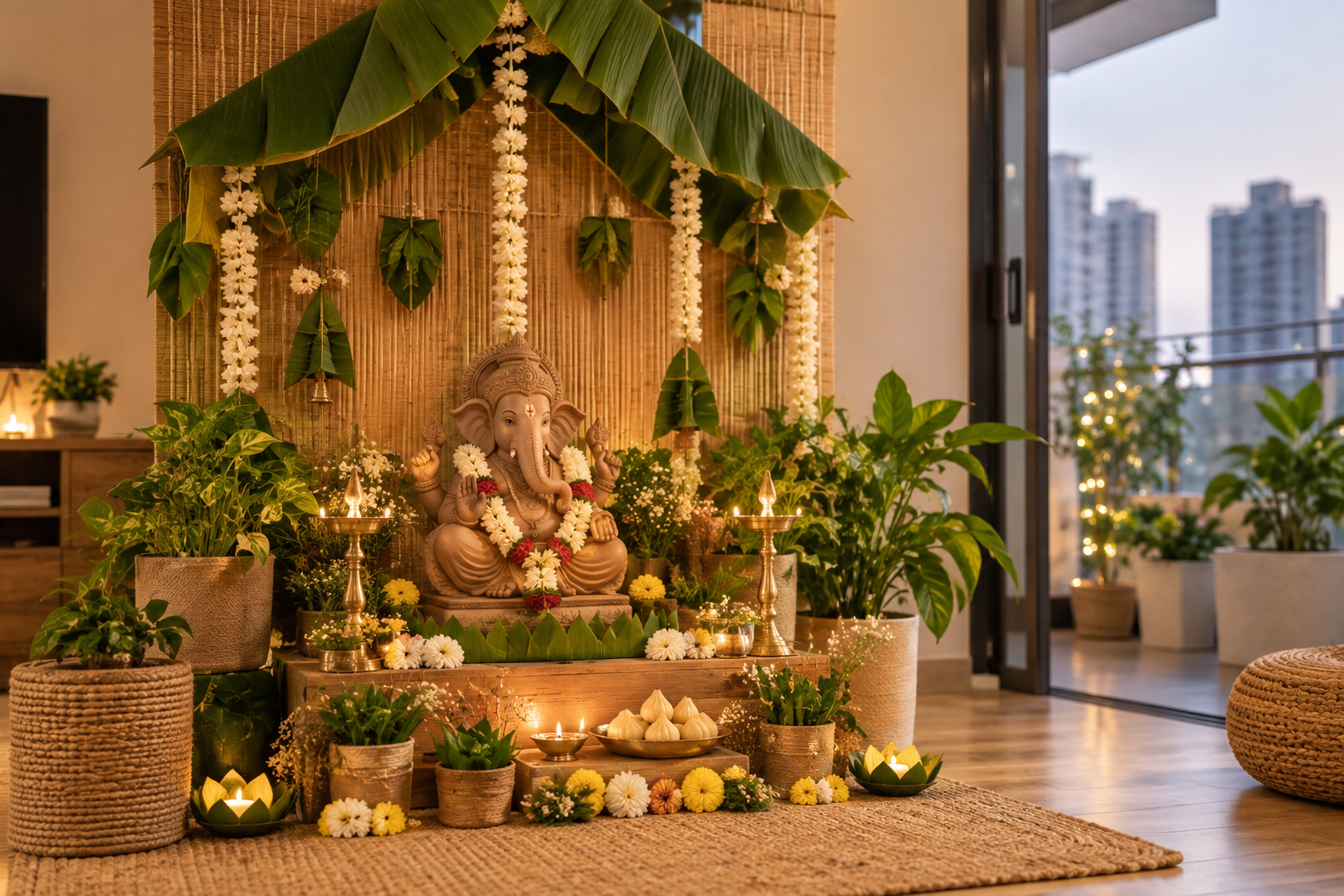
Ganpati decor that is suitable for apartments should have one focus wall, a small foundation, and natural materials rather than thermocol or plastic.
A clay (shaadu mitti) idol with water-based colors can be immersed safely at home and leaves no synthetic trace.
Nine unique Ganpati decoration ideas for the house, ranging from balcony mandaps to cloth torans, make use of recycled or reusable materials.
Reuse, composting, and home-immersion steps are as important as the decor itself, especially in flats with little outdoor area.
What are the Apartment-Friendly Eco Decor Rules for Ganesha Decoration?
Limit the setup to one wall, use natural or recycled materials, and avoid anything that sheds, smokes, or requires a drain to dispose of.
- How can you apply space-saving setup principles?
Build in layers: a low foundation, a vertical backdrop, and a single light source to keep the floor and walkway clear.
- What materials are sustainable for Ganpati decor?
Shaadu mitti clay, reclaimed fabric, terracotta, brass, and recycled paper are all effective and durable over festivals.
- What should you avoid in flats?
Thermocol and single-use plastic props.
Synthetic glitter and foam stickers.
PVC banners and mixed-material sticky decorations.
Open incense or diyas near the drapes.
Loose wiring near water or fabrics.
What Are the 9 Most Innovative Ganpati Decoration Ideas for the Home?
These unique Ganpati decoration ideas for the home work well in apartments and make use of things that most households already have.
- How do you make a balcony garden mandap?
Use your balcony’s natural light and vegetation as a pre-made backdrop.
Place the idol next to existing potted plants.
Place a light cotton canopy overhead.
Use hanging planters or jute rope trimmings.
Keep the routes to the balcony door free.
- How can a saree backdrop be reused?
A spotless, treasured family saree or a fresh festival drape provides a gorgeous, long-lasting backdrop for your spiritual area.
Select Festive Textiles: To commemorate the auspicious event, use a solid-colored silk or a drape with gold borders.
Hang with Care: To avoid damaging your walls, mount the cloth with removable hooks or tension clips.
Match the setup: Combine the backdrop fabric with a complementary runner for the puja table.
Protect the Material: Avoid using permanent glue, hefty tape, or pins that could rip the fabric.
- How can you create a banana leaf accent wall?
Fresh banana leaves provide a cheerful and entirely compostable backdrop.
Arrange the leaves in a fan configuration behind the idol.
Pin with natural jute thread, not tape.
Add marigold strings between the leaf pieces.
After the celebration has ended, compost the leaves.
- How do you make a floral hoop frame?
A flower-wrapped hoop is a beautiful and reusable focal piece.
Decorate a cane or metal hoop with fresh flowers.
Hang it right behind the idol.
Reuse the hoop frame every year.
Compost the spent flowers after immersion.
- How would you style a recycled paper lantern corner?
Paper lanterns provide warm light without using synthetic materials.
Use only uncoated recycled paper lanterns.
Hang them in a cluster above the setup.
Pair with warm LED lamps rather than candles.
Keep flat-folded lanterns for next year.
- How do you create a fabric scrap toran wall?
Leftover fabric strips are transformed into a colorful, reusable toran.
Cut scraps into triangles or leaf shapes.
String them on a jute cord.
Hang across the entryway or from the top of the background.
In between festivals, store the toran flat.
- How do you make a terracotta and brass shelf setup?
A little shelf adorned with terracotta and brass offers texture without bulk.
Terracotta diyas can be used as the base layer.
Include one or two brass embellishments.
Keep the palette to earthy tones.
Reuse them once a year if necessary.
- How should you arrange a coconut shell diya display?
Clean coconut shells make unique, reusable diya holders.
Halve and carefully clean the coconut shells.
Place the bent shells in little rings made of rolled clay, metal washers, or sand beds to ensure they remain exactly upright and solid.
Fill with oil or ghee and add a cotton wick.
Arrange the holders in an orderly row or cluster along the base of your puja platform.
After the festival, wash, dry, and preserve the shells for future festivities as needed.
- How do you design a minimalist white and green theme?
A crisp white-and-green color scheme keeps cramped prayer areas feeling bright, fresh, and visually open rather than congested.
Hang a plain white cotton or linen fabric as a smooth backdrop to reflect the most light.
Add organic texture by framing the god with fresh trailing ferns, money plants, or mango leaf garlands.
To retain a clean esthetic, use only white flowers (such as jasmine or lilies) and green leaves as decorative accents.
Avoid using excessive gold borders, sparkling curtains, or shiny metallic accents that interrupt the peaceful, basic atmosphere.
What Are the Best Budget-Friendly Ganpati Decoration Ideas for Home?
For a basic Ganpati decoration at home, here are some ideas based on budget while focusing on a beautiful, clutter-free setup:
Budget-Friendly (Rs. 100 – Rs. 500): Use a spotless silk family saree as a backdrop, wrap a fresh marigold garland around the god pedestal, and hang a single string of soft fairy lights.
Mid-Range (Rs. 500 – Rs. 2,000): Add a reusable clay or metal accent item (such as brass diyas), and create a natural white-and-green frame with potted indoor ferns or mango leaves.
Premium (Rs. 2,000+): Invest in a sustainable, artisan-crafted cane screen or a hand-painted eco-friendly clay idol while keeping the surrounding arrangement simple and elegant.
What Ganpati themes work well in small apartments?
- How do you create a traditional flower theme?
Layer marigold, rose, and jasmine around the foundation, keeping the palette warm and the backdrop plain to highlight the flowers.
- How do you design a modern minimalist theme?
Stick to one or two neutral tones, a simple backdrop, and a single sculptural element, such as a hoop frame or paper lantern.
- How can you come up with a kid-friendly craft theme?
Allow children to create paper buntings, hand-painted diyas, or flower garlands to add a personal, visually appealing touch to the arrangement.
How Should You Plan for Reuse, Storage, and Visarjan?
- How do you prepare your decorations for next year?
Fold the fabric flat, box the terracotta and brass pieces separately, and name the containers so that next year’s setup takes minutes rather than hours.
- How do I compost flowers and leaves?
Before composting, separate flowers and leaves from thread, foil, and plastic. Also, check to see if your building or community accepts religious flower waste.
- What are the greatest home-based idol dissolving options?
Follow your municipal corporation’s or the State Pollution Control Board’s current home immersion requirements, and never dump residue into a drain unless specifically approved.
Apartments with separate balcony space and large communal rooms make seasonal arrangements easier to manage.
Conclusion
A significant Ganpati display requires only one wall, natural materials, and a post-festival plan. Whether you choose a traditional flower motif or a minimalist one, reuse is what keeps eco-friendly decor going year after year.
Stay informed with IndexTap for the latest updates on Mumbai’s infrastructure and real estate developments.